

Inpatient alcohol withdrawal treatment
The person stays at the clinic for several days under the care of doctors and nurses, day and night. This option is chosen when alcohol withdrawal treatment at home is unsafe: after past seizures or delirium, with serious illnesses, or when there’s no one around to look after them.
Inpatient alcohol withdrawal treatment at a glance
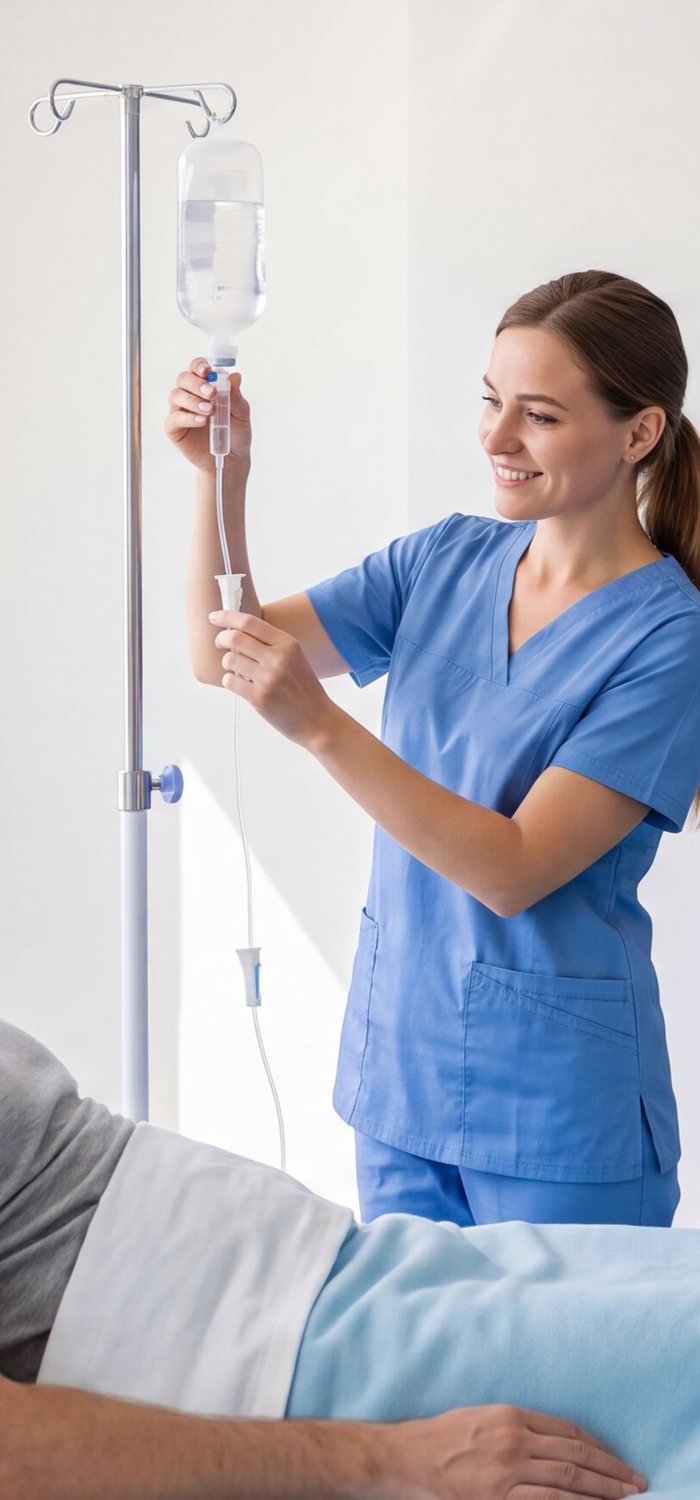
Inpatient alcohol withdrawal treatment means treating alcohol withdrawal syndrome at the FAVOR clinic, where the person stays in a ward and doctors monitor them around the clock. The doctor examines the patient, prescribes IV drips and medication, and keeps track of blood pressure, pulse and consciousness. If the condition changes at night, help is close by. A day in the inpatient unit costs from 3,500 UAH.
- The FAVOR clinic’s inpatient unit. We’ll give you the address by phone.
- 24/7.
- Depends on the condition.
- from 3,500 UAH per day
When alcohol withdrawal is better treated as an inpatient
Inpatient care is needed when alcohol withdrawal may cause complications that won’t be noticed in time at home. These include seizures or delirium after previous binges, serious heart or liver disease, diabetes, or mixing alcohol with medication or drugs. If none of these apply and the person agrees to an IV drip, help at home is often enough. The doctor makes the final decision after the exam.
Help at home is usually enough when
- The binge is short, and past binges had no complications
- The person is conscious, knows where they are and answers questions
- There are no serious chronic illnesses
- An adult can stay with them for the next 24 hours
The doctor will most likely recommend inpatient care when
- Previous binges were followed by seizures, hallucinations or confusion
- They have heart, liver or kidney disease, diabetes or epilepsy
- Along with alcohol, the person took sleeping pills, sedatives or drugs
- The person lives alone and there’s no one to look after them
- The person has already had IV drips at home but isn’t getting better
- The patient wants to go through withdrawal at the clinic, away from home
When a general hospital is needed, not an addiction clinic
If the person has an acute, life-threatening condition, such as a head injury, bleeding, chest pain or prolonged seizures, an ambulance takes them to a general hospital. An inpatient addiction unit is not a substitute for intensive care. The doctor will specify which conditions rule out admission to FAVOR.
When to call 103, not the clinic
The first days without alcohol can be dangerous. If you notice anything on this list, call an ambulance first. You can call us afterwards.
- the person is unconscious or can’t be woken up;
- breathing is slow, raspy or has pauses;
- seizures have started;
- the person doesn’t recognize loved ones, sees or hears things that aren’t there, or is very agitated;
- high fever together with confusion and shaking;
- chest pain or pressure;
- vomiting blood or dark material that looks like coffee grounds;
- the person talks about suicide or threatens to harm themselves.
Stay with the person while the ambulance is on its way. If they are lying down and vomiting, turn them on their side.
How inpatient alcohol withdrawal treatment works
Inpatient alcohol withdrawal treatment starts with a phone call and ends with a conversation about what to do after discharge. In between come the exam, treatment in the ward and daily monitoring. How many days each stage takes depends on how long the binge lasted and on the person’s overall health.
-
Phone call
Tell us how many days the binge has lasted, whether there have been seizures or hallucinations before, and what illnesses the person has and what medications they take. We’ll explain whether inpatient care makes sense and agree on a time. You’ll get the inpatient unit’s address during the call.
-
Getting to the clinic
Family members bring the person in. If their condition is serious and the trip is dangerous, call 103.
-
Exam and plan
The doctor talks to the patient and family, examines the patient, measures blood pressure and pulse, and checks for complications. After the exam, the doctor explains the prescribed treatment and roughly how many days it will take.
-
Treatment in the ward
The patient receives IV drips and medication that ease withdrawal symptoms and protect against complications. The doctor chooses the formula; we don’t list drug names on the website. Medical staff monitor the patient’s condition day and night.
-
Discharge and next steps
Once the acute phase has passed, the doctor discusses next steps with the patient and family. Alcohol withdrawal treatment relieves withdrawal but does not treat the addiction itself. So the doctor may suggest coding, the 28-Day Program or rehabilitation. The patient makes the decision.
How much inpatient alcohol withdrawal treatment costs
Inpatient alcohol withdrawal treatment is charged per day: from 3,500 UAH. The total depends on how many days the person stays at the clinic and what treatment they need. The doctor quotes the exact price after the exam and before treatment begins.
| Service | What’s included | Price |
|---|---|---|
| A day in the inpatient unit | Ward, 24-hour monitoring and the treatment prescribed by the doctor. | from 3 500 UAH |
| Addiction doctor consultation at the clinic | Exam and recommendations, when it’s not yet decided whether inpatient care is needed. Phone consultations are free. | from 1 000 UAH |
| Doctor’s home visit and exam | If the person can’t or won’t travel, the doctor examines them at home and advises whether inpatient care is needed | from 1 500 UAH |
Who treats patients in the inpatient unit
Inpatient treatment is prescribed by addiction doctors at the FAVOR clinic. Categories and years of experience are listed as confirmed by the clinic.
Can I be admitted anonymously?
Inpatient treatment at FAVOR is confidential: only the patient, the doctors and the people the patient agrees to inform know about the admission. We don’t share data from website requests with third parties.
- You can call on someone else’s behalf without giving their name.
- How form data is processed: see the “Privacy policy”.
How families can prepare the person for inpatient care
Families don’t need to spend hours persuading the person or bring them in by force. An adult consents to treatment on their own, and no one is admitted without consent. Your part is to calmly offer help, pack their things and documents, and stay close until admission.
- Talk when the person is relatively sober. Say what you see and what you fear, without blame.
- Don’t give them alcohol “for the road” to take the edge off, and don’t give sleeping pills from the home medicine cabinet.
- Write down how many days the binge has lasted, when they last drank, what illnesses they have and what medications they take.
- Gather any hospital discharge summaries and the medications the person takes regularly.
- What to bring to the inpatient unit: see the list on the inpatient clinic page.
- If the person refuses, call us yourself: the doctor will advise on how to continue the conversation.
It’s hard for families too. If you’d like to talk to a psychologist yourself, mention it during the call.
Frequently asked questions about inpatient alcohol withdrawal treatment
-
How much does inpatient alcohol withdrawal treatment cost?
A day in FAVOR’s inpatient unit costs from 3,500 UAH. The total depends on the number of days and the treatment the doctor prescribes. The doctor quotes the exact cost after the exam, before treatment begins.
-
How many days will the person need to stay?
It depends on how long the binge lasted, age, illnesses and how withdrawal goes. Some people are discharged within a few days; others need longer. The doctor gives an estimated stay after the exam and updates it daily.
-
When is inpatient care better than an IV drip at home?
Inpatient care is safer if past binges were followed by seizures, hallucinations or confusion, if there is heart or liver disease or diabetes, or if the person used other substances along with alcohol. Also when there’s no one at home to look after them. In other cases, alcohol withdrawal treatment at home is often enough.
-
Can someone be admitted without their consent?
No. An adult consents to treatment on their own, and FAVOR does not admit anyone by force. Family members can call for advice on how to suggest treatment without a fight. If the person’s life is at risk, for example they are unconscious or having seizures, call 103.
-
Can we come at night or on the weekend?
You can call FAVOR any time, day or night. Be sure to call before you set off: we’ll give you the address and tell you when to come.
-
Can the patient leave early?
The patient can refuse treatment at any time. If the acute phase hasn’t passed yet, the doctor will explain the risks and offer another option, such as continuing treatment at home.
-
Will their employer find out?
You don’t have to give the person’s surname when you call.
-
What can be done after discharge to prevent another binge?
Alcohol withdrawal treatment relieves withdrawal but does not treat addiction. International guidelines call detox only the first step of treatment (NIDA). Next, you can discuss coding, the 28-Day Program or rehabilitation with the doctor.
Who signed off and what it’s based on
Author
Medical reviewer
- Published
- Updated
- Medically reviewed
Other help
-
 — Alcohol withdrawal treatment at home
Alcohol withdrawal treatment at home

-
 — Inpatient addiction clinic
Inpatient addiction clinic
-
 — Inpatient detox
Inpatient detox
-
 — Alcohol aversion therapy (“coding”)
Alcohol aversion therapy (“coding”)
-
 — 28-Day Program
28-Day Program
Not sure whether home or inpatient care is right? Call us
Tell us how the person is feeling and how long the binge has lasted. A doctor will tell you where they’ll be safer and give you the inpatient unit’s address. You can call any time, day or night.