
Ultra-rapid opioid detoxification (UROD)
UROD is opioid detox under deep sedation or general anesthesia. This page explains how the method is described, why it is risky, and why international guidelines do not recommend it as standard treatment. A doctor decides whether any detox is appropriate, and only after an examination.
UROD in brief
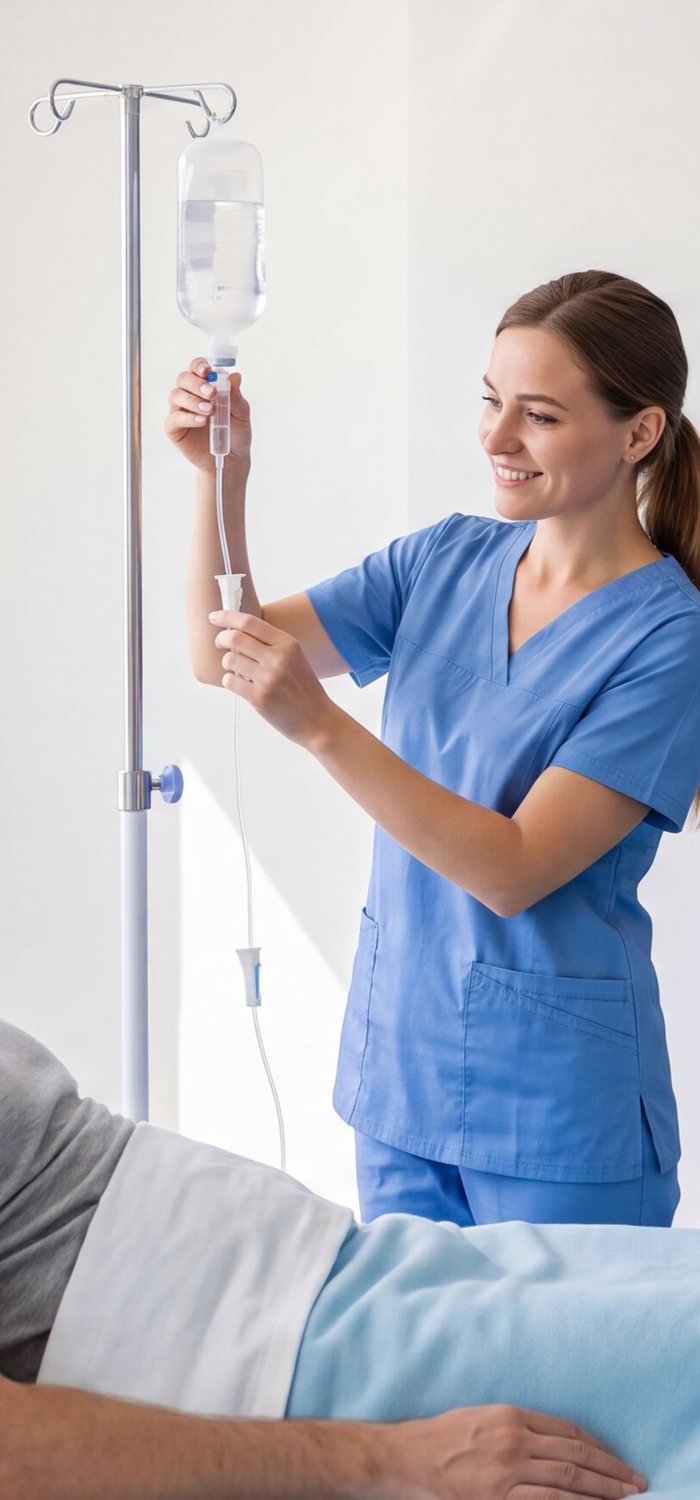
Ultra-rapid opioid detoxification (UROD) is a method in which opioid withdrawal is triggered with antagonist drugs while the person is under deep sedation or general anesthesia. The aim is to get through the hardest part of withdrawal in hours rather than days. A Cochrane systematic review found that this carries a higher risk of serious complications and no added benefit. The WHO recommends against using the method.
- Opioid detox under deep sedation or general anesthesia
- Recommends against it (2009 guidelines)
What UROD promises and what research shows
UROD promises a fast way through opioid withdrawal, but research shows otherwise: the risk of serious complications is higher than with standard detox, and people are no more likely to stay off drugs afterwards. Below is what people expect when choosing the method and what is known about it. A doctor decides on any detox after an examination.
What people expect from UROD
- Sleep through the most acute part of withdrawal
- Shorten the detox period
- Move on to addiction treatment sooner
What research has shown
- Higher risk of serious complications than detox without anesthesia (Cochrane, 2010)
- Deep sedation adds no benefit compared with light sedation (Cochrane, 2010)
- Deaths and hospitalizations after the procedure have been reported (CDC, 2013)
- A year later, people who had UROD were no more likely to stay abstinent than after standard detox (CDC, 2013)
- The WHO recommends against detox under deep sedation or anesthesia (2009)
- The 2025 Ministry of Health standard describes opioid detox by other methods, without anesthesia
Who should not have UROD
Opioid detox is not performed during pregnancy, as stated in Ministry of Health standard No. 1102. The full list of contraindications is determined by the anesthesiologist and the addiction doctor after an examination.
Signs of opioid overdose: call 103
The WHO names three main signs of opioid overdose: the person is unconscious, breathing is weak or has pauses, and the pupils are pinpoint. The risk is higher after any detox because the body loses its tolerance to the usual dose. If you see any of the signs below, call an ambulance.
- the person does not respond to voice or touch;
- breathing is slow, raspy, has pauses, or cannot be heard;
- lips or fingernails have turned blue;
- pupils are pinpoint;
- skin is pale, cold, and clammy;
- seizures have started;
- the person is very drowsy and “drifts off” mid-sentence;
- the person talks about suicide or threatens to harm themselves.
Don’t leave the person alone. If they are breathing but unconscious, lay them on their side. The 103 dispatcher will tell you what to do until the ambulance arrives.
How the UROD procedure is usually described
Medical literature describes UROD in four stages: examination, the procedure under anesthesia, waking up under observation, and follow-up treatment. Details vary between clinics. This description explains the method and is not a treatment plan: a doctor draws up the plan after an examination.
-
Consultation and examination
The doctor finds out which opioids the person used and for how long, whether there were overdoses, and what other conditions they have.
-
Procedure under anesthesia
An anesthesiologist puts the person into deep sedation or general anesthesia. Opioid antagonists are then given to trigger withdrawal while the person sleeps.
-
Waking up and observation
After waking up, the person stays under medical observation.
-
Follow-up treatment
No detox, including detox under anesthesia, removes cravings for opioids. The Ministry of Health standard requires offering addiction treatment after detox and explaining what to do in case of overdose. For options, see the drug addiction rehabilitation page.
How much UROD costs
We don’t list a price for UROD on the website. Opioid detox without anesthesia at the FAVOR inpatient unit costs from 3,500 UAH per day. The doctor gives the exact cost of any treatment after an examination and before it begins.
| Service | What’s included | Price |
|---|---|---|
| Inpatient detox, per day | Withdrawal treatment without anesthesia, a room, and 24/7 observation. | from 3 500 UAH |
| Consultation with an addiction doctor at the clinic | Examination and explanation of detox options. Phone consultations are free. | from 1 000 UAH |
Who advises on opioid detox
UROD is performed by an anesthesiologist together with an addiction doctor. The clinic’s addiction doctors advise on opioid detox. Categories and years of experience are listed as confirmed by the clinic.
Can I get advice anonymously?
Consultations on opioid detox at FAVOR are confidential. On the phone, you can describe the situation without giving a name and find out what treatment options are available. Doctors are bound by medical confidentiality.
- You can call on someone else’s behalf without giving their name.
- How form data is processed: see the Privacy policy.
What to ask a doctor before agreeing to UROD
Families often look for UROD because they want it all to be over quickly and without suffering. That is understandable. But speed does not make treatment more reliable, and anesthesia adds risk. Before agreeing to any procedure, ask the doctor a few questions.
- Who will administer the anesthesia, and what is their specialty?
- Is the room equipped for resuscitation, and how quickly can the person be taken to a hospital?
- What tests will be done before the procedure?
- How long will the person be observed after waking up?
- What treatment is planned after detox?
- Does the clinic hold a Ministry of Health license for medical practice? You can verify it.
- If someone promises you’ll be “free of addiction in a day” or guarantees a result, that’s a reason to be cautious.
An adult consents to treatment, including anesthesia, on their own. Decisions are made together with them, not for them.
Frequently asked questions about UROD
-
What is UROD in simple terms?
UROD is opioid detox in which the person is put into deep sedation or general anesthesia and withdrawal is triggered with medication while they sleep. The idea is that the hardest hours of withdrawal pass unnoticed. The procedure is performed by an anesthesiologist together with an addiction doctor.
-
Is UROD safe?
UROD is not safer than standard detox. A Cochrane systematic review (2010) found that deep sedation carries a higher risk of serious complications and no added benefit. The US CDC has reported deaths and hospitalizations after this procedure. The WHO recommends against using the method.
-
How much does UROD cost?
Opioid detox without anesthesia at the FAVOR inpatient unit costs from 3,500 UAH per day. The doctor gives the exact cost after an examination.
-
Is it true that after UROD you no longer crave opioids?
No. Detox relieves physical withdrawal, but not the craving for the substance. The Ministry of Health standard states directly that detox alone rarely leads to lasting sobriety. That is why addiction treatment is needed afterwards: counseling, rehabilitation, or the maintenance therapy provided for in the Ministry of Health standard.
-
How is UROD different from standard detox?
Standard detox takes several days: the doctor gradually relieves withdrawal symptoms while the person stays conscious. UROD tries to compress this into hours under anesthesia. The 2025 Ministry of Health standard describes gradual detox under daily medical supervision. Learn more on the Inpatient detox page.
-
Can UROD be done at home?
No. Anesthesia is given by an anesthesiologist in a room with equipment to support breathing and the heart. This cannot be provided at home. If you are offered anesthesia at home, refuse.
-
Why is it dangerous to use again after detox?
Without opioids, the body loses its tolerance to the usual dose within a few days. The same dose the person took before can cause an overdose after detox. That is why the Ministry of Health standard requires explaining to the patient what to do in case of overdose. The signs of overdose are listed above.
Who signed off and what it’s based on
Author
Medical reviewer
- Published
- Updated
- Medically reviewed
Other help
-
 — Inpatient detox
Inpatient detox

-
 — Inpatient addiction clinic
Inpatient addiction clinic
-
 — Drug addiction rehabilitation
Drug addiction rehabilitation
-
 — 28-Day Program
28-Day Program
-
 — Home visit by an addiction doctor
Home visit by an addiction doctor
Talk to a doctor before choosing a method
Tell us what the person uses and for how long. The doctor will explain which detox options suit them and what risks they carry. The conversation is anonymous, and you can call any time, day or night.