Author
What Addiction Rehabilitation Is and How It Works
Addiction rehabilitation is a recovery program that begins once the acute phase has passed. It works on the reasons for using, cravings, behavior and relationships. According to NIDA, most people need at least three months of treatment, and detox is only the first stage.
11 min read
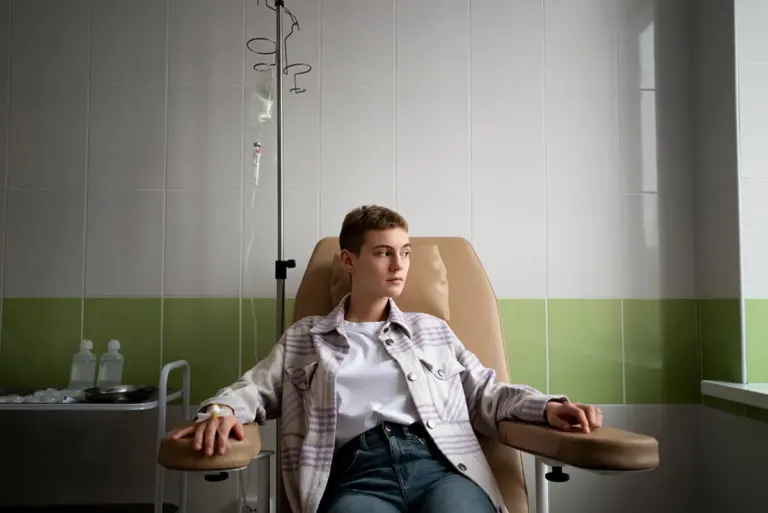
The family has been through IV drips and a few quiet weeks, and then it all starts over again. In conversations with specialists the word “rehabilitation” comes up again and again, but what actually happens to a person during a program is rarely explained.
This article explains how a program works from the inside, how long each stage lasts, how rehabilitation differs from detox, and how to tell whether this is what a person needs.
What is addiction rehabilitation?
Addiction rehabilitation is a structured program in which a person lives by a set schedule and works regularly with a psychotherapist and counselors. The goal is not just to “hold out without the substance” but to learn to live in a way that lets them manage without it: notice what pushes them toward using, tolerate emotions, rebuild relationships and return to everyday responsibilities.
What sets rehabilitation apart from medical procedures is what it works on. Detox or an IV drip removes the substance from the body and helps a person get through withdrawal. Rehabilitation works on the reasons a person keeps coming back to the substance. That is why it is measured in weeks and months, not days.
What rehabilitation is not
- It is not a hospital. The person is not lying on an IV drip but working: sessions with specialists, groups, duties, physical activity.
- It is not isolation “so they can’t get any.” There are restrictions, but the point of the program is not to physically keep the person away from the substance, but to help them learn to do without it.
- It is not re-education. Addiction is an illness, not a character flaw, and it is not treated with lectures on morality.
- It is not a one-off procedure with a guarantee. A responsible center does not promise a guaranteed result: recovery depends both on the person and on what awaits them at home.
Why isn’t it enough to just stop using?
Because physical dependence and psychological dependence are different things. A few days after detox, acute withdrawal passes, but changes in how the brain works — in the reward system, motivation and impulse control — take much longer to recover. The person returns to the same life with the same ways of responding to stress.
NIDA describes addiction as a chronic disease that changes how the brain works, and its treatment as a long-term process in which relapses are possible, as with other chronic diseases. NIDA also calls detox only the first stage of treatment: on its own, it does little to change drug use in the long term.
There is a practical risk too. After a period of abstinence, tolerance to the substance drops, and a dose the person used to take can become dangerous. WHO lists returning to opioid use after a break among the risk factors for overdose. So a pause without further work is not a safer state but a postponed risk.
How is a rehabilitation program structured?
A program combines several components: individual work, group sessions, a daily routine, work with the family and a relapse prevention plan. Each addresses its own part of the problem, which is why they are combined. NIAAA, describing treatment for alcohol addiction, also advises combining mutual support groups with treatment led by professionals.
| Component | What is done | Why |
|---|---|---|
| Individual work | Exploring what the person was “numbing” with the substance: anxiety, trauma, guilt, an inability to ask for help | Works on the cause, not the effect |
| Group sessions | The experience of other people with addiction, honest feedback, working together on similar difficulties | Breaks the illusion of “I’ve got it under control” and the feeling that “no one will understand me” |
| Routine and daily structure | Sleep, meals, duties, physical activity, a clear schedule | Restores the ability to live by a plan, which addiction destroys |
| Work with the family | Consultations for loved ones, family meetings, new rules of communication | Without changes at home, the person returns to an environment that supported their use |
| Relapse prevention | Drawing up a specific action plan for high-risk situations | Replaces the promise “I won’t do it again” with a plan of what to do |
What a day in the program might look like
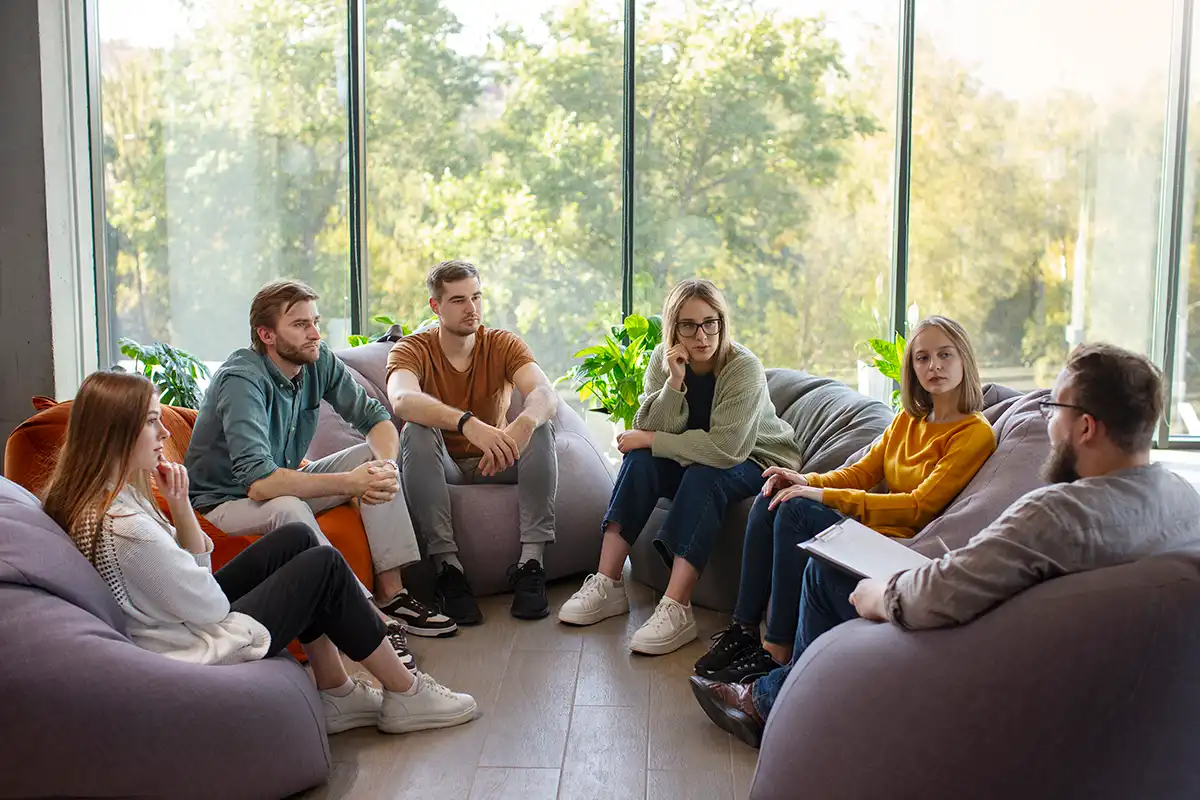
The day is usually scheduled: wake-up, breakfast, a morning group, an individual session with a specialist or a themed session, lunch, groups, exercise, household duties, and a review of the day in the evening. At the start of the program there is little free time “alone with your thoughts,” and that is deliberate: it is in empty time that holding on is hardest. Each center has its own specific schedule.
How this is organized at FAVOR — specialists, session formats, accommodation — is described on the “Alcohol addiction rehabilitation” and “Drug addiction rehabilitation” pages, and living conditions on the “Accommodation” page.
How long does rehabilitation last and what are its stages?
According to NIDA, most people with an addiction need at least three months of treatment to significantly reduce or stop their drug use; longer treatment is associated with better outcomes. Ukraine’s state standard for social and psychological rehabilitation services describes short programs (28 days to 3 months) and long ones (3 to 6 months). The length is chosen after assessing the person’s condition: it depends on the substance, how long it was used, health, and how many attempts to stop there have already been.
| Stage | What happens |
|---|---|
| Adjustment | Getting used to the routine, meeting the group and the specialists, first steps in working on motivation |
| Main work | Individual and group sessions, work on the reasons for using, family meetings |
| Preparing for discharge | A plan for the first weeks at home, getting back to work and relationships, a plan in case of relapse |
| Support after discharge | Groups, consultations, support in everyday life |
How long each stage lasts depends on the person and the program. If the program is cut short “to get it over with faster,” the person often leaves exactly when the hardest part of the work begins. Besides longer programs, FAVOR offers the 28-Day Program — an intensive start, after which we recommend ongoing support.
How can you tell that rehabilitation is needed rather than one-off help?
If the problem keeps coming back, one-off measures are no longer enough. An IV drip relieves the acute symptoms, but if the person returns to using again and again afterward, the issue is not only the substance in their blood but their behavior. That is what a program works on. These signs are a reason to consult a specialist:
- The person has tried to stop before, and each time the problem returned within weeks or months.
- They have had IV drips or other short-term interventions more than once.
- The person can’t handle even a short break without irritability, insomnia or anxiety.
- Using has already cost them their job, relationships or health, but it hasn’t stopped.
- Life has narrowed down to one thing: get it, use it, recover.
- The family lives in constant anxiety and has long been solving someone else’s problems instead of its own.
If the person is in an acute condition right now — confusion, seizures, hallucinations, delusions, they are not coming to or are behaving dangerously — call 103 or the 24/7 hotline. This is not the moment to choose a program: medical help comes first.
How is rehabilitation different from detox?
They are different stages with different goals. Detox helps a person get through acute withdrawal and removes the substance from the body. Rehabilitation changes the way a person deals with cravings, stress and relationships. In practice they do not compete; one follows the other.
| Parameter | Detox | Rehabilitation |
|---|---|---|
| What it works on | The body, the acute phase | Reasons for using, behavior, relationships |
| Who leads it | A doctor, nurses | A psychotherapist, addiction counselors |
| Duration | Usually a few days | From several weeks to months |
| Outcome | The person is physically stable | The person has skills and a plan for staying off substances |
| Risk after completion | High if there is no next stage | Lower, but support after discharge is needed |
Families often ask about “coding” (aversion therapy) as well. Whatever the method, it does not replace the work on the reasons for using that a rehabilitation program does. Whether a person needs additional medication is decided by a doctor after an examination.
How an addiction clinic differs from a rehabilitation center and where to start in a specific situation is covered in the article “Addiction Clinic vs. Rehabilitation Center: What’s the Difference”. How detox works and what to expect is explained in the article “Drug Detox: Stages and What to Expect”.
What happens after leaving the center?
The riskiest period is the first months at home. The person returns to their old surroundings, familiar places and usual triggers, but without daily support close by. That is why the program does not end at discharge: it is followed by aftercare support — regular groups, consultations and contact with a specialist.
A relapse at this stage does not mean everything was in vain. With chronic diseases, flare-ups are possible, and the main thing is not to disappear but to get back to the specialists quickly: the shorter the episode, the more of the progress can be kept. If the person has been drinking or using for several days in a row, medical help may be needed first. How support after the program works is described on the “Aftercare support” page.
What role does the family play in rehabilitation?
A big one. A family can support recovery, or it can unintentionally pull the person back into the old script: covering up consequences, controlling every step, living in constant anxiety. That is why the program includes consultations for loved ones, even though they are not the ones being treated.
During the program and after discharge, it helps family members to:
- attend family meetings: the whole family needs to change, not just one person;
- agree in advance on how life will work after discharge: house rules, money, time together;
- know the plan in case of relapse and not stay silent if they notice warning signs;
- not turn care into controlling every step: the person needs to learn responsibility themselves.
What to do while the person is not yet ready for treatment, and how not to cover up the consequences of their use, is covered in the section on what families can do of the article on clinics and rehabilitation centers.
Frequently asked questions
What is the minimum length of rehabilitation?
Ukraine’s state standard for social rehabilitation services describes short programs starting at 28 days. At the same time, NIDA notes that most people need at least three months of treatment. So a short program is a start, after which the work should continue: in a longer program or in support after discharge.
Is detox required before rehabilitation?
If the person is physically stable and there is no acute withdrawal, the program can start right away. But if they used recently or there are signs of withdrawal, a doctor is needed first: in that state a person is physically in no shape for sessions. At the consultation, a specialist decides what is needed right now.
Can rehabilitation be done on an outpatient basis while living at home?
Yes, this option exists. NIDA stresses that no single method suits everyone: the format and length are tailored to the person’s needs. Outpatient care may work when the home environment is calm and the person is motivated to get results. With long-standing addiction, repeated relapses or a difficult family situation, the specialist may recommend a residential program. The decision is made after assessing the person’s condition.
How much does rehabilitation cost?
Rehabilitation is charged per month of the program. What determines the amount and what is included in the price is covered in the answer about prices in the article on clinics and rehabilitation centers and on the “Prices” page.
Can I be treated anonymously?
Contacting FAVOR is confidential. What this means from a legal point of view and how “anonymous” differs from “confidential” is explained in the article “Anonymous Addiction Treatment: What It Really Means”.
This article is for information only and does not replace a consultation with a doctor. Self-medication may be harmful to your health. If the condition is acute, call 103 or the 24/7 hotline.
Author and sources
- Published
- Updated
Related articles

Not sure where to start? Call us
Tell us what’s going on, and we’ll suggest where to start. We answer 24/7. A family member can call too, anonymously.